
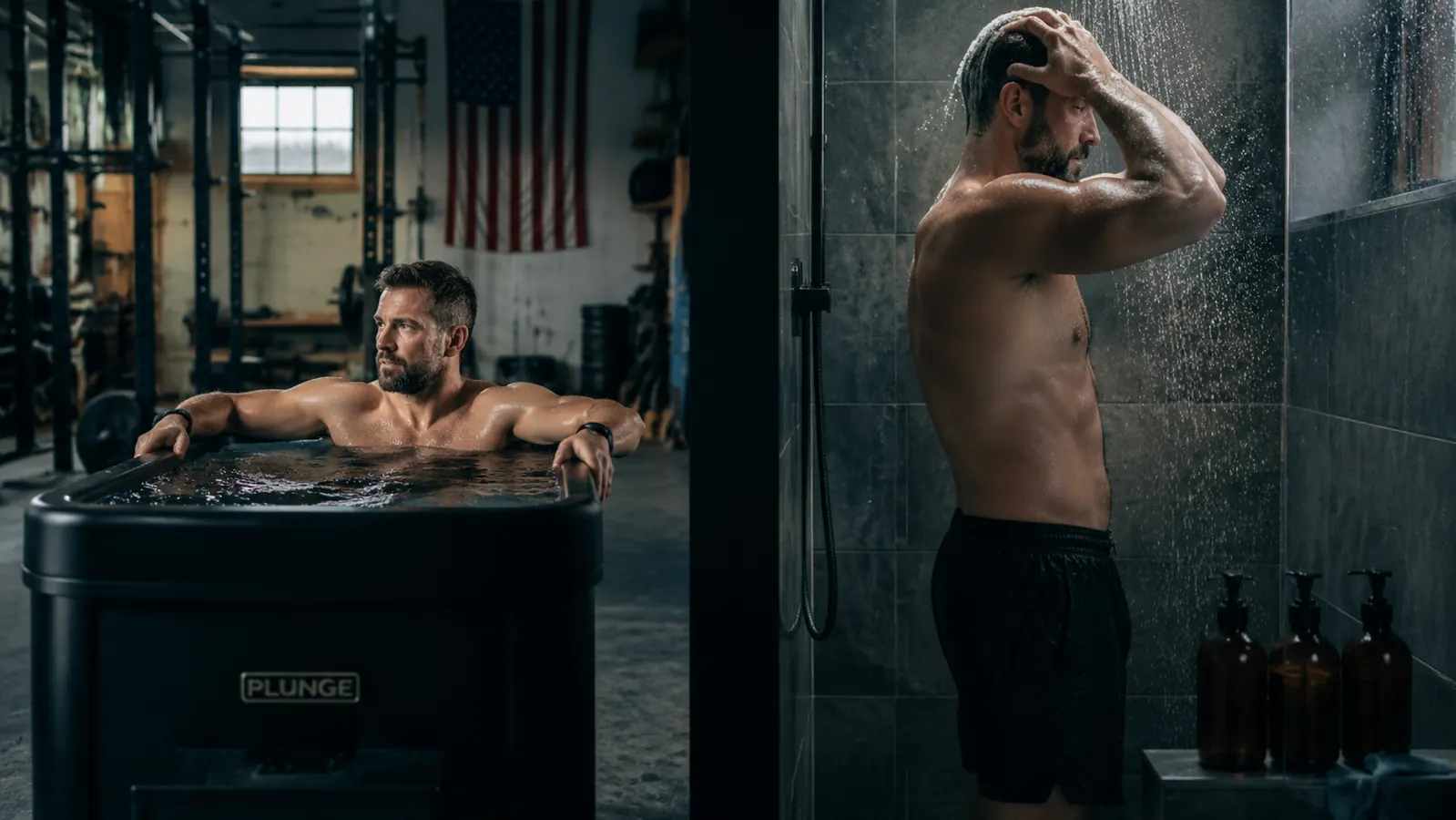
For three winters my whole cold therapy routine was standing under the coldest setting my water heater could put out, gritting my teeth for two minutes, and calling it done. I run a maintenance crew, so my knees and lower back take a beating five days a week, then I usually spend the weekend on a stand or in a boat asking even more of them. The cold shower helped some. It didn't fix the ache that showed up in my hips by Thursday.
Short answer, because I know you want it before the details: a real cold plunge tub, I've been running a Bubplay tub in my garage, does more than a cold shower for muscle and joint recovery, mainly because it gets your whole body under water at a temperature you actually control, and it keeps you there long enough for it to matter. A cold shower is better than nothing and it's free, but it's not the same tool. Here's the full breakdown of where each one earns its keep.
I want to be fair about this before I start picking a side, because I used the shower for years and I still use it. This isn't a case where one option is junk and the other is magic. It's a case where two different tools solve two different problems, and most guys never stop to ask which problem they actually have.
| Cold Plunge Tub | Cold Shower | |
|---|---|---|
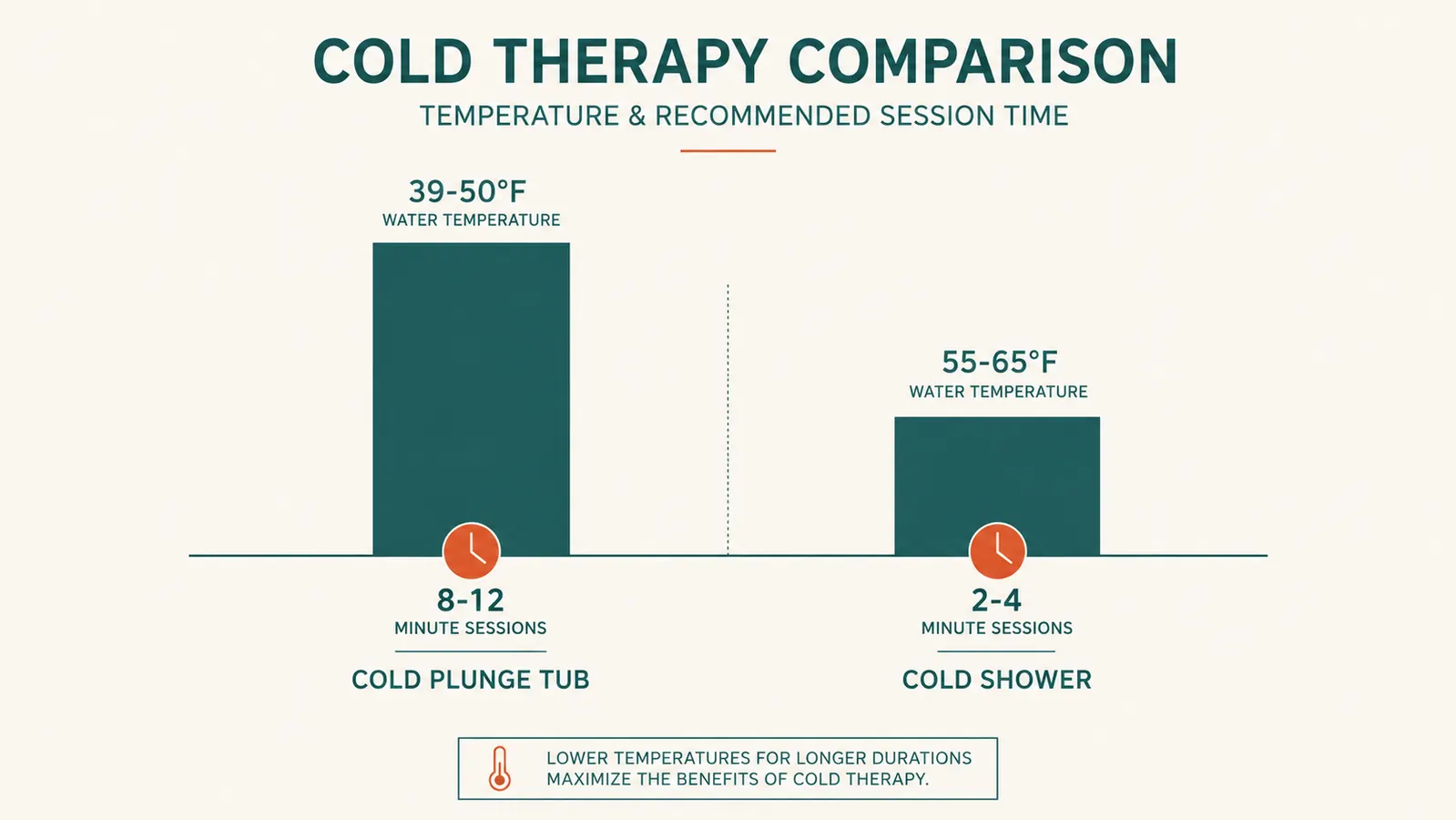
| Water Temperature | 39-50°F, set and held steady with ice or a chiller | 55-65°F, whatever your water heater's cold line delivers |
| Body Coverage | Full immersion, chest to feet, arms included if you want | Partial, moving spray, never fully submerged at once |
| Session Length | 8-12 minutes, timed and consistent | 2-4 minutes before most people bail |
| Setup Time | 5-10 minutes to fill and cool with bagged ice | Instant, just turn the handle |
| Cost Per Use | One-time tub cost, ice or a chiller add-on after that | A few cents of water and gas per shower |
| Consistency | Same depth, same temp, every single time | Varies by season, house water pressure, and who showered before you |
| Recovery Depth | Full-body vasoconstriction, noticeably less next-day swelling | Localized cooling, mostly a wake-up jolt |
| Portability | Foldable, packs down, travels to the cabin or the truck bed | Fixed to whatever bathroom you're standing in |
What Full Immersion Actually Does That Splashing Doesn't
The body responds to cold by pulling blood away from your skin and limbs and pushing it toward your core, which is what tamps down swelling and flushes out some of the built-up fluid in sore joints. That response scales with how much of you is actually cold at once. Two minutes of water hitting your shoulders in a shower gets a small version of that reaction going. Ten minutes chest deep in 45 degree water gets the full version, legs and hips included, which is exactly where a guy on his feet all day is carrying his damage.
There's also a time element the shower just can't match. Most people can't stand under genuinely cold water much past two or three minutes before they either shut it off or their body starts fighting them on it. Sitting in a tub, you settle into it. The first ninety seconds are rough, then it levels out and you can hold steady for eight, ten, twelve minutes depending on how tough you're feeling. That longer window is where the deeper effect happens, not in the first shock of cold.
Where the Cold Plunge Tub Wins
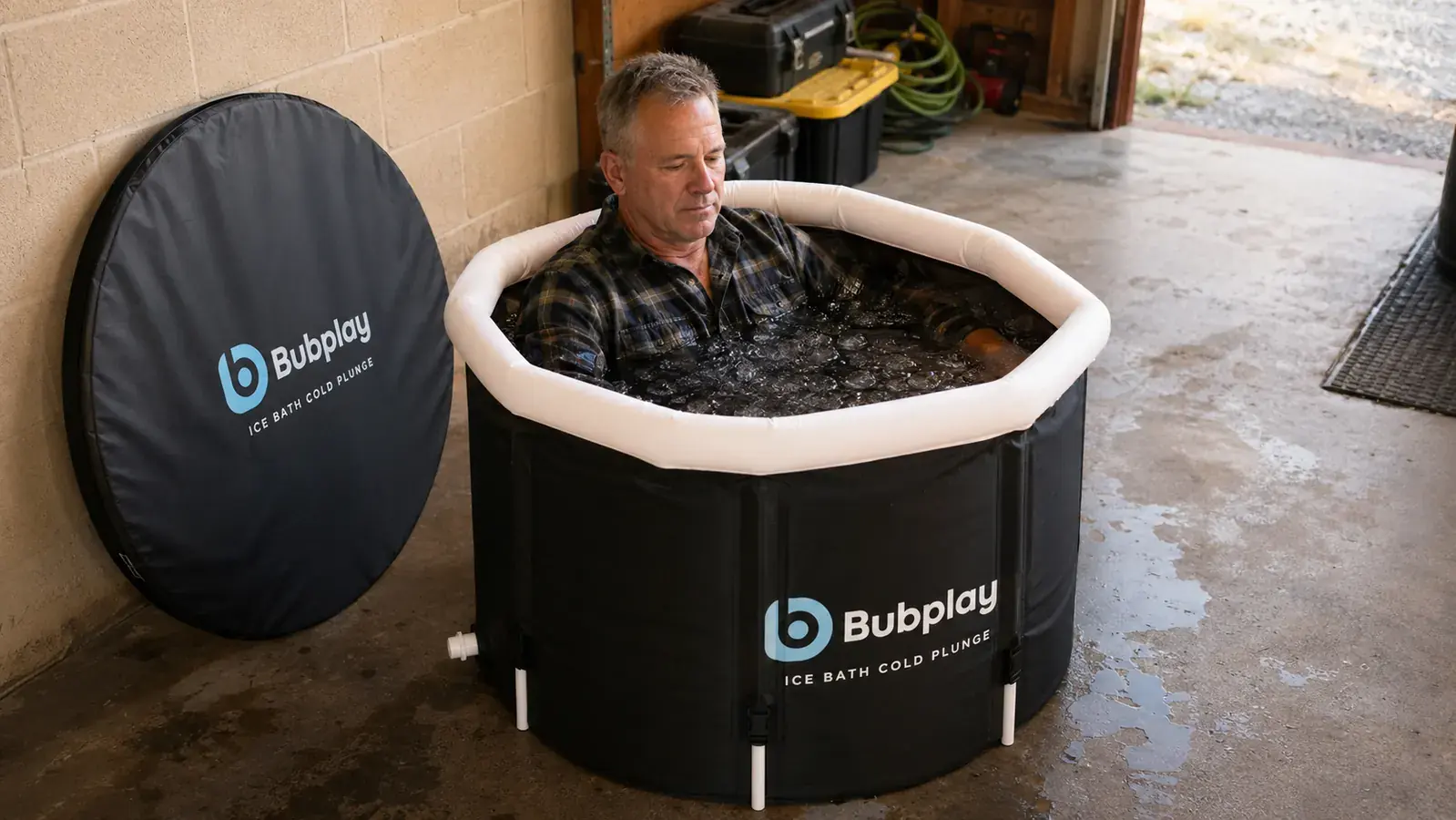
The single biggest difference is coverage. When you're standing in a shower, water hits your shoulders and back and runs off the rest of you. Your legs get wet, sure, but they're not sitting in cold water the way they are in a tub. After a full day on my feet doing walkthroughs and pulling wrenches, it's my calves and the backs of my knees that are screaming, and a shower just never got down there the way the Bubplay tub does. I fill it, dump in two bags of ice from the gas station on my way home, and by the time I've changed clothes it's sitting around 45 degrees. I get in to my chest and stay ten minutes with a timer on my phone.
The other part nobody talks about is that a shower forces you to fight the water pressure and the spray pattern the whole time, which keeps your nervous system a little on edge. Sitting still in a tub, once you get past the first ninety seconds, is almost meditative. I've had some of my clearest thinking about a job I was dreading sitting in that tub at 45 degrees with nothing to do but breathe. That's not something I ever got from two minutes of hopping around under a shower head.
It also travels, which matters more than I expected. I fold the Bubplay tub down and toss it in the truck bed when we head to camp for the weekend. A cold shower doesn't come with you. If a cabin's water heater is weak, which most of them are, you don't even get a proper cold shower out there anyway.
Where the Cold Shower Wins
I won't pretend the shower doesn't have a place. It's free, it's already installed in your house, and it takes zero planning. If I get home late from a hunt and I'm too worn out to fill and ice a tub, a cold shower for two minutes still knocks the edge off and wakes me up enough to eat dinner without falling asleep at the table. For the quick jolt, the mental reset, or a travel situation where I'm staying somewhere without room for a tub, the shower still does its job.
It's also the better option if you're brand new to cold exposure and the idea of sitting chest-deep in 45 degree water sounds like a bad idea. A cold shower lets you ease in, control the intensity by how long you stand there, and back out any second you want. Nobody's ever gotten stuck in a shower the way you can talk yourself into staying in a tub a little too long.
And honestly, if your soreness is mostly shoulders and neck from something like swinging a hammer overhead all day, a shower actually hits the spot pretty directly since that's exactly where the spray lands. Not every ache needs the full tub treatment.
Stop rinsing the ache off and start actually cooling it down
A cold shower splashes your shoulders. The Bubplay tub puts your whole body, hips and knees included, into water you control down to the degree. If your legs are the problem, your legs need to be in the water.
Amazon Check Today's Price on Amazon →A shower cools what the water hits on its way down. A tub cools everything below the waterline, and it doesn't let up until you climb out.
The Learning Curve Nobody Mentions
First time I sat down in that tub, I made a noise I'm not proud of and my hands wanted to grip the edges and pull me right back out. That's normal. It gets easier fast, usually by the third or fourth session your body stops treating it like an emergency and you can sit through the whole ten minutes without white-knuckling it. Nobody warns you about that first week, and I think that's why a lot of guys buy a tub, hate the first two sessions, and let it sit folded in the garage.
The trick that worked for me was breathing through my nose slow and steady the second I sat down, instead of gasping through my mouth like my instinct wanted. Sounds simple, made a real difference. A cold shower doesn't demand that same discipline because you can always just turn the handle and be done, which is part of why it's an easier habit to keep and a lighter habit to build real tolerance from.
How I Actually Use Both Now
I didn't fully drop the shower once I got the tub. What changed is when I reach for which one. Any day I'm off my feet less than usual, a quick cold shower after I clean up is enough to keep me loose. It's the days after a full shift plus a hike checking trail cameras, or a long weekend hauling gear in and out of the boat, where the tub earns its spot. Ten minutes chest deep after those days has cut down how stiff I am getting out of bed the next morning more than three winters of cold showers ever did.
The other thing that pushed me toward the tub was consistency. My water heater's cold line temperature swings with the seasons, colder in January, noticeably warmer by August. The tub doesn't care what month it is. Two bags of ice gets me to roughly the same temperature every time, so I know exactly what I'm getting into and I can actually compare how I feel week to week instead of guessing whether it was the cold or just a rough day.
Right now my routine is a cold shower most weekdays and the tub every Sunday evening, plus any day I've been on rough ground for hours straight. That split has kept my knees from locking up the way they used to by Wednesday, and it hasn't cost me much more than the price of a couple bags of ice a week.
Who Should Buy Which
If your soreness is mostly upper body, or you just want a fast wake-up before an early shift, save your money and stick with the shower. It's genuinely fine for that. But if you're dealing with whole-body fatigue, swelling in your knees or hips, or you're the kind of person who's on their feet or on rough ground all day and needs your legs to hold up again by morning, a cold plunge tub is the tool built for that job. It's the difference between rinsing off and actually treating the thing that's sore.
There's no wrong answer here as long as you're honest about what's actually hurting. A cold shower costs you nothing extra and takes zero setup, so there's no harm in starting there. But if you've already tried it and you're still stiff by Thursday the way I was, the tub is the upgrade that actually changes the equation instead of just repeating it.
One Thing I'd Warn You About
Whichever one you pick, don't treat colder as automatically better. I've made the mistake of pushing a session past ten minutes just to prove something to myself, and all it got me was a headache and hands that took twenty minutes to warm back up. Cold water raises your heart rate and blood pressure for a bit, so if you've got a heart condition or you're just not sure how your body handles the shock, ease in with the shower first and talk to a doctor before you sit chest deep in a tub of ice water.
The other habit worth building either way is not jumping straight from work boots into cold water without a few minutes to settle down first. I give myself five or ten minutes after a shift before I get in, just walking around and letting my heart rate come down some. It's a small thing, but it's made the whole routine feel a lot less like a shock and more like something I actually look forward to at the end of a long day.
Give your legs the same treatment your shoulders have been getting for free
The Bubplay tub folds down small enough to store in a garage corner and travels if you need it to. Set your own temperature, sit long enough for it to matter, and get up feeling like you actually did something about the ache instead of just rinsing past it.
Amazon Check Today's Price on Amazon →