
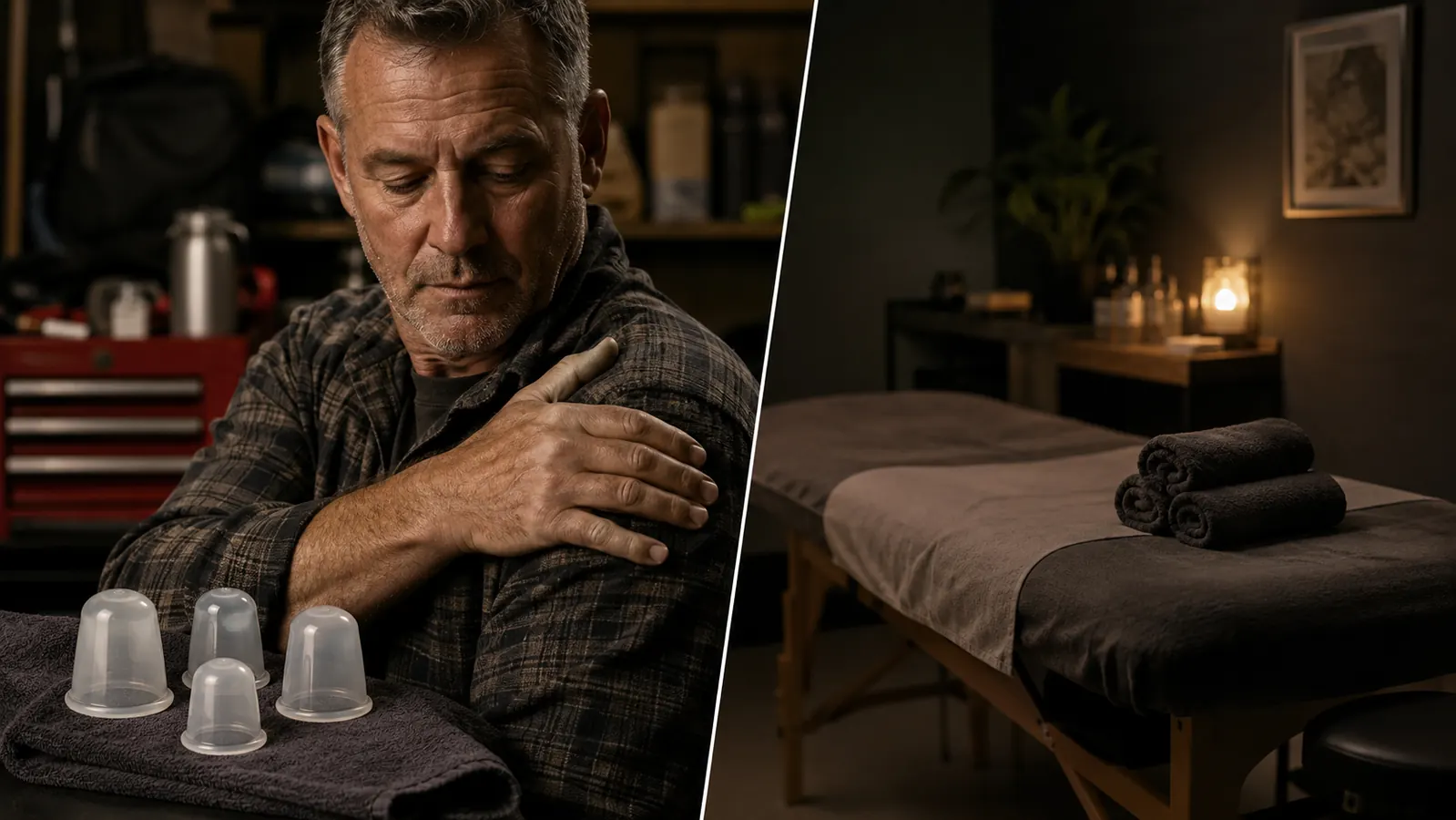
I run maintenance for a mid-size apartment complex, which means most weeks I'm the guy hauling a forty-pound compressor up three flights of stairs, crawling under a deck to fix a leak, or wrestling a ladder into the truck bed at the end of a shift. My back and shoulders take the brunt of it, and for a while my only fix was booking a deep tissue massage every few weeks and gritting my teeth through the drive home from feeling like I got hit by a truck twice. Then a buddy who does trail crew work talked me into a cheap silicone cupping set, the kind you use on yourself with no training, and I've been running both systems side by side long enough now to know exactly where each one earns its keep.
Short answer, since I know that's what you clicked for: for the specific job of pulling a stubborn, surface-level knot loose and keeping it from locking back up between paychecks, a silicone cupping set gets you real relief for a one-time cost of under $30, usable the second you get home from a shift. A deep tissue massage still does things four little rubber cups can't, mainly a trained set of hands finding the deep knot you didn't know was there and working your whole body in one sitting. They're solving overlapping but different problems. Here's the full breakdown.
| Cupping Therapy | Deep Tissue Massage | |
|---|---|---|
| Cost Per Use | Under $30 one time for a 4-cup set, then it's free every time after that | $80 to $140 per session, plus tip, every single visit |
| Availability | Sits in a drawer or the truck console, ready the second your shift ends, 9pm on a Tuesday included | Book days or weeks out, and you build your evening around their calendar, not yours |
| Session Length | 5-15 minutes per spot, glide or stationary, run it twice a week without thinking about it | Standard appointment is 60-90 minutes, hard stop when the timer's up whether you're loose or not |
| How It Works | Negative-pressure suction pulls tight fascia and skin upward, away from the muscle, to release surface tension | Direct downward pressure and kneading from a therapist's hands, elbows, or forearms works into the muscle itself |
| Areas Covered | Anywhere you can reach yourself: shoulders, upper back, calves, IT band, forearms | Full-body table work in one session, including spots you physically can't reach on your own like between the shoulder blades |
| Skill Required | No training needed, watch one video and you're placing cups correctly within a session or two | None on your end, but results depend entirely on the therapist's training and how well they read your body |
| Visible Aftereffects | Leaves circular marks that can last several days to a week, most people wear a shirt over them and move on | No marks, might feel tender or bruised in a spot the next day but nothing visible under clothes |
| Consistency | Same suction and glide pattern every time you use it, results depend on your own technique | Varies by which therapist you get, and how their day's gone before yours |
| Getting There | Zero travel, use it on the couch, in the garage, or in a hotel room on the road | Drive to a studio or spa, then account for parking and drive time both ways |
Where the Cupping Set Wins
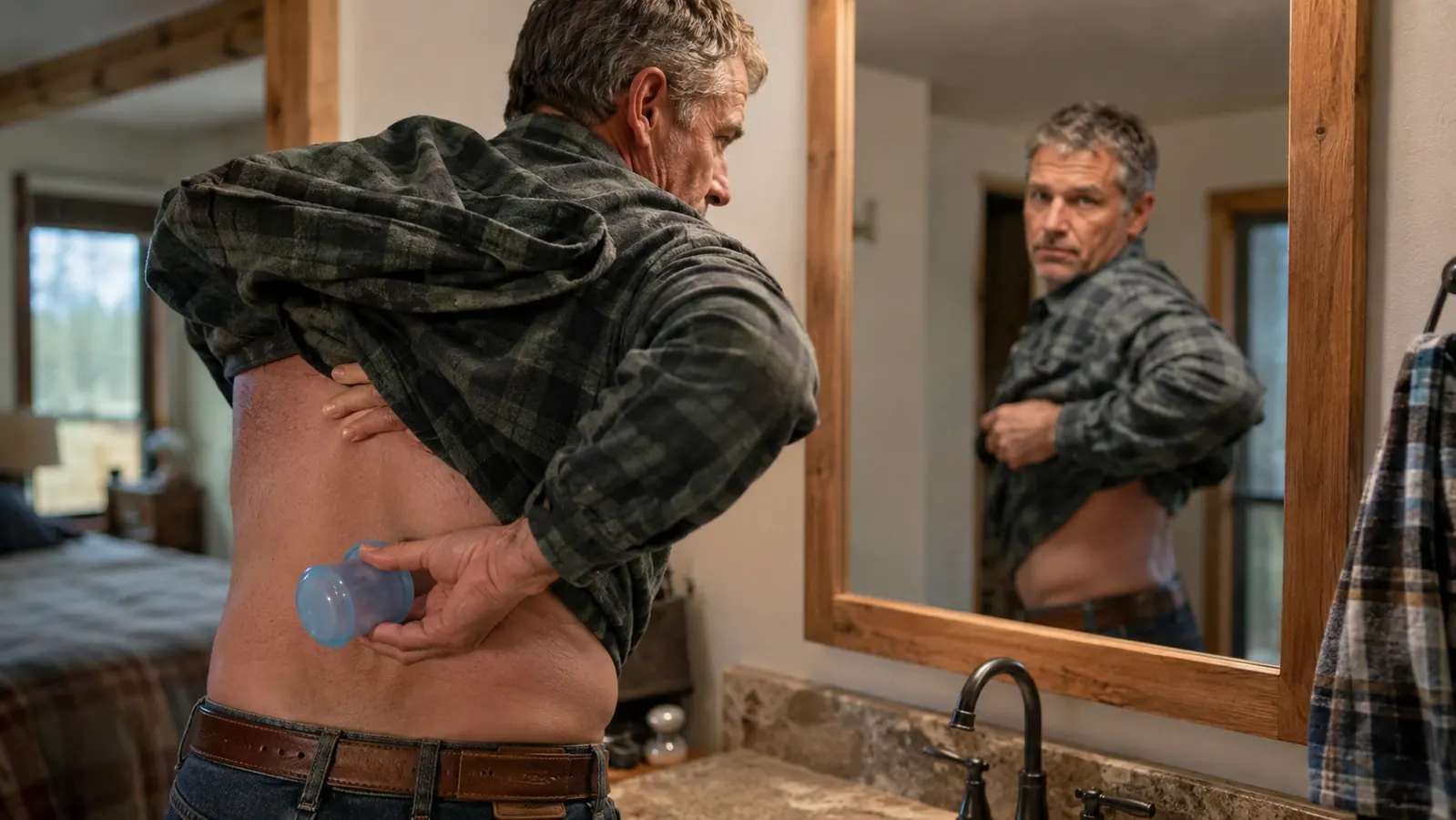
The first thing that changed once I had cups in the house was timing, same as it always is with home tools versus appointments. My shoulder doesn't tighten up on a massage therapist's schedule, it tightens up by Wednesday afternoon after I've spent two straight days hunched under a crawl space fixing plumbing. With the Lure Essentials cupping set, I don't have to grind through it until Saturday's appointment. I get home, sit on the edge of the bed, and I'm running a cup up my trap muscle within a minute of walking in the door. That kind of immediate access matters more than I expected, because catching the tightness early keeps it from turning into the kind of deep knot that eats up a whole massage session later.
The cost side is the other one that's hard to argue with. I was spending somewhere around $100 a session between the massage and the tip, going roughly once a month, so call it $1,200 a year just on that one line item. The whole cupping set cost less than a single one of those visits, and I've used it two or three times a week since I bought it. Do that math over even six months and it's not a close comparison. It's also small enough to keep in the truck console, so after a long weekend hauling gear and setting up camp, I can cup my lower back at the tailgate before the drive home instead of white-knuckling four hours in the driver's seat.
Where Deep Tissue Massage Wins
I'm not going to pretend four rubber cups replace a trained set of hands. A good deep tissue therapist can find a knot between your shoulder blades that you physically cannot reach with a cup, work around an old injury without aggravating it, and adjust pressure moment to moment based on how your muscle is responding underneath their fingers. Cupping pulls tissue upward from the surface, which loosens fascia and gets blood moving, but it's not the same mechanism as a thumb or elbow driving straight down into a deep, stubborn trigger point. If you've got a knot that's been there for months and hasn't budged, or pain that's radiating somewhere it shouldn't, that's a job for a licensed therapist, not a device you bought off Amazon.
Full-body coverage in one sitting is the other real advantage the massage table has. A 90-minute session can work your neck, shoulders, lower back, glutes, and calves without you having to stop, reposition, or figure out an angle you can't quite hit on your own body. Cupping is genuinely great for anywhere you can reach and see what you're doing, but it's still a solo job, and there are spots on your own back that just aren't reachable no matter how you twist the applicator. If you're sore everywhere after a weekend of splitting wood or hauling gear up a trail, a massage table covers more ground in less total effort from you.
Stop letting a knot sit there until Saturday's appointment
A silicone cupping set gets real suction release on tight shoulders and a locked-up lower back the same night the tension shows up, not whenever the next open slot happens to be. One-time cost, ready in a minute, works from the couch or the tailgate.
Amazon Check Today's Price on Amazon →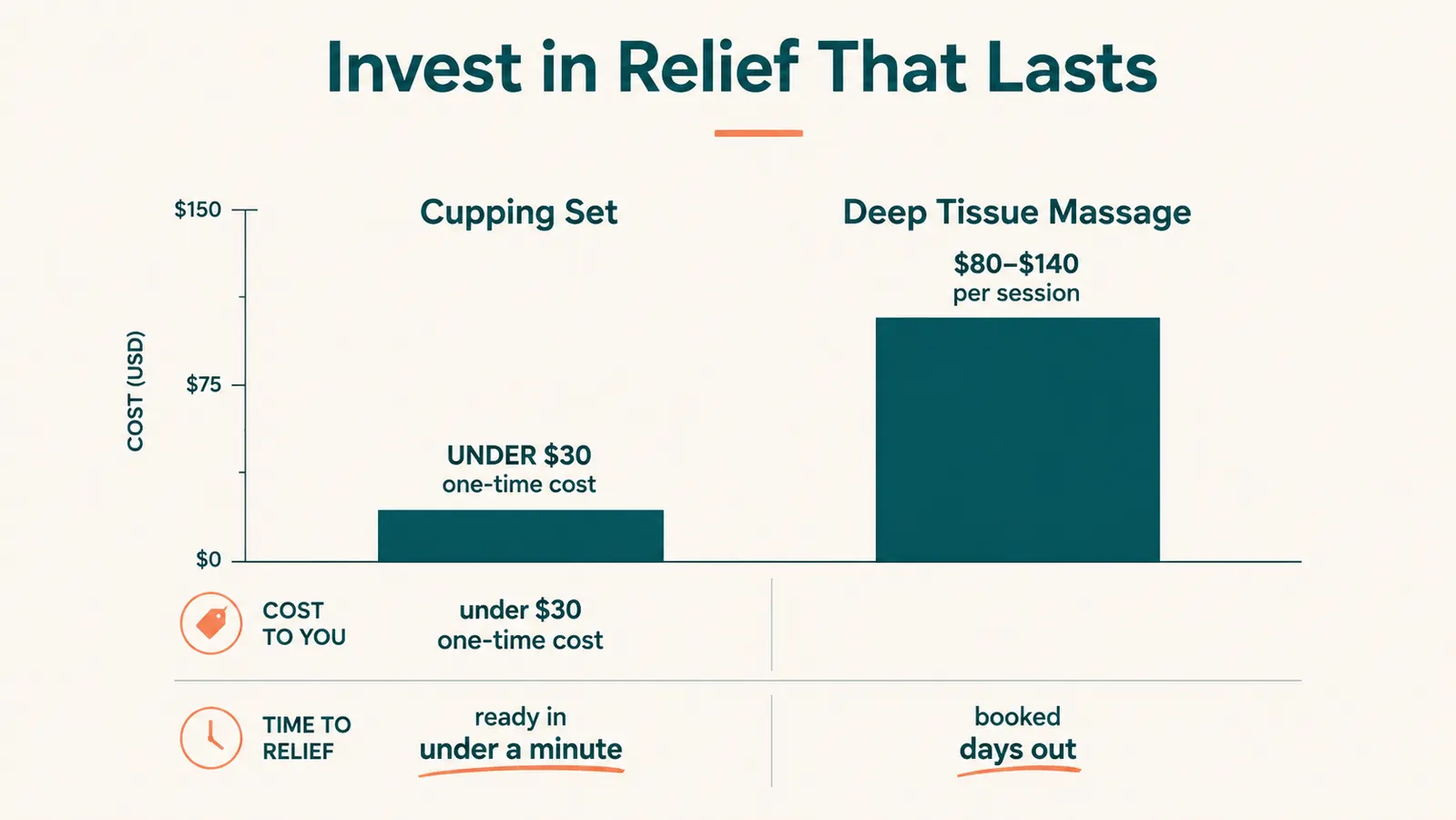
What the Marks Actually Mean
Nobody warns you about the marks the first time you use a cupping set, so I'll save you the surprise. The suction pulls blood to the surface, and depending on how tight the area was and how long you leave the cup in place, you'll end up with a circular mark that ranges from light pink to a deep purple that looks a lot worse than it feels. Mine usually fade over four or five days. It doesn't hurt, but it does mean planning around a work shirt if you're not into explaining it, and it's a real reason some guys stick to areas nobody's going to see, like the lower back or calves, instead of running it on the neck before a shift.
The upside of the mark is it's actually a decent gauge of how tight you were. The darker and faster the mark shows up, the more restricted that fascia was to begin with. I've started using it as a rough map of where I'm carrying the most tension week to week, and it lines up almost exactly with whatever job beat me up the hardest, overhead work leaves marks on my shoulders, a weekend of driving leaves them on my lower back. A deep tissue massage skips this entirely since there's no suction involved, so if you don't want any visible aftereffects at all, that's a point in the massage table's favor.
A massage therapist works the whole body once a month, if you can get the appointment. The cupping set works the one spot that's actually screaming at you, the same night it starts screaming, which for me turned out to matter a lot more than I expected.
The Time Cost Nobody Adds Up
Nobody talks about the drive when they're weighing these two things against each other, but it's real money and real time. My old massage place was almost half an hour each way, so a 90-minute appointment actually ate closer to two and a half hours out of my evening once I counted parking, checking in, and the drive home. Add in the fact that I usually needed a Saturday morning to make it work with my shift schedule, and you've burned half a day for an hour and a half of hands-on time. The cupping set doesn't cost me any of that. I use it while I'm half-watching a game or sitting on the edge of the bed after a shower, still in my work socks.
That saved time compounds in a way I didn't see coming. Since there's no drive and no appointment to plan around, I actually use the Lure Essentials cupping set more often than I ever used the massage service, even though each session is a fraction of the length. More frequent short sessions on the exact spot that's tight has done more for keeping my shoulders and lower back loose week to week than the occasional long session ever did, mostly because I'm catching the tension before it has time to set up shop and turn into something worse.

How I Actually Use Both Now
These days the Lure Essentials cupping set handles the routine maintenance and the massage therapist handles the exceptions. Two or three nights a week, if my shoulders or lower back are tight from a physical day on the job, I'll glide a cup or two over the area for ten minutes while I catch up on messages. That's kept the day-to-day soreness from ever building into something worse. When something actually goes wrong, a knot between my shoulder blades I can't reach, or a lower back that's not responding to cupping and rest after a week, I book the real thing and let a professional put their hands on it.
That split has cut my massage spending down to maybe four or five visits a year instead of one every month, and my shoulders feel better managed now than they did when I was only getting worked on once a month and toughing out the weeks in between. Frequent small maintenance beats infrequent big fixes, at least for the kind of soreness that comes from doing the same physical work week after week.
Who Should Buy Which
If your soreness is routine, the kind that shows up from repetitive physical work, a long hike, or a weekend hauling gear in and out of the truck, a silicone cupping set is going to cover most of what you actually need, and it pays for itself against a single massage appointment. If you're dealing with a knot you can't physically reach, a deeper injury, or you want a full-body reset with a trained set of hands reading what's underneath, book the professional. Most guys I know, myself included, land somewhere in the middle, using the cups for upkeep and saving the real appointments for when something's actually gone wrong.
There's no rule that says you have to pick one for good. Start with the cupping set since it's the lower-cost, lower-commitment option, and see how much of your usual tightness it actually handles before you decide whether you still need the recurring appointment stacked on top of it.
Give your shoulders the same attention your wallet's been giving the massage studio
A silicone cupping set pulls tight, surface-level tension loose without a drive, a calendar, or a $100 tip line. It won't replace a real therapist for the deep, stubborn stuff, but it'll handle the every-week tightness for less than the cost of a single appointment.
Amazon Check Today's Price on Amazon →